










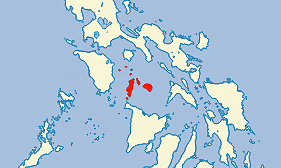







The inflation rate in the province of Romblon accelerated to 3.9 percent in May 2026, according to the Philippine Statistics Authority (PSA) – Romblon.
During an inflation briefing, Engr. Johnny F. Solis, Chief Statistical Specialist of PSA Romblon, said the province’s year-to-date average inflation rate from January to May 2026 stood at 1.3 percent.
PSA data showed that the upward movement in inflation was primarily driven by price increases in key commodity groups, led by Transportation, which posted an inflation rate of 19.8 percent. This was followed by Housing, Water, Electricity, Gas and Other Fuels at 4.5 percent, Food and Non-Alcoholic Beverages at 2.6 percent.
Among individual commodities, kerosene registered the sharpest increase at 43.4 percent, followed by public transport fares at 25.5 percent and liquefied petroleum gas (LPG) at 15.2 percent. Other major contributors to rising prices included freshwater fish at 11.7 percent, well-milled rice at 11.5 percent, and dairy products at 8.2 percent.
Meanwhile, slower price declines were observed in commodities such as shrimp, eggs, and selected fruits and vegetables.
The report further noted that the province’s Consumer Price Index (CPI) rose to 135.1 in May 2026, indicating that a basket of goods and services valued at ₱100 during the 2018 base year now costs approximately ₱135.10.
The Purchasing Power of the Peso (PPP) in the province declined to 0.74, meaning that the purchasing value of ₱1.00 in 2018 is equivalent to only 74 centavos in May 2026.
Across the MIMAROPA region, the overall inflation rate remained unchanged at 5.9 percent in May 2026. Oriental Mindoro recorded the highest inflation rate in the region at 7.2 percent, while Romblon remained among the provinces with the lowest inflation rates at 3.9 percent.
For the bottom 30 percent income households, the average inflation rate for the first five months of 2026 was recorded at 2.4 percent. Higher costs of food and non-alcoholic beverages, housing and utilities, and transportation were identified as the primary drivers. The PSA also cited public transport fares, house rentals, rice, tropical fruits, and food services from restaurants and cafés as the leading contributors to the increased financial burden on low-income households.